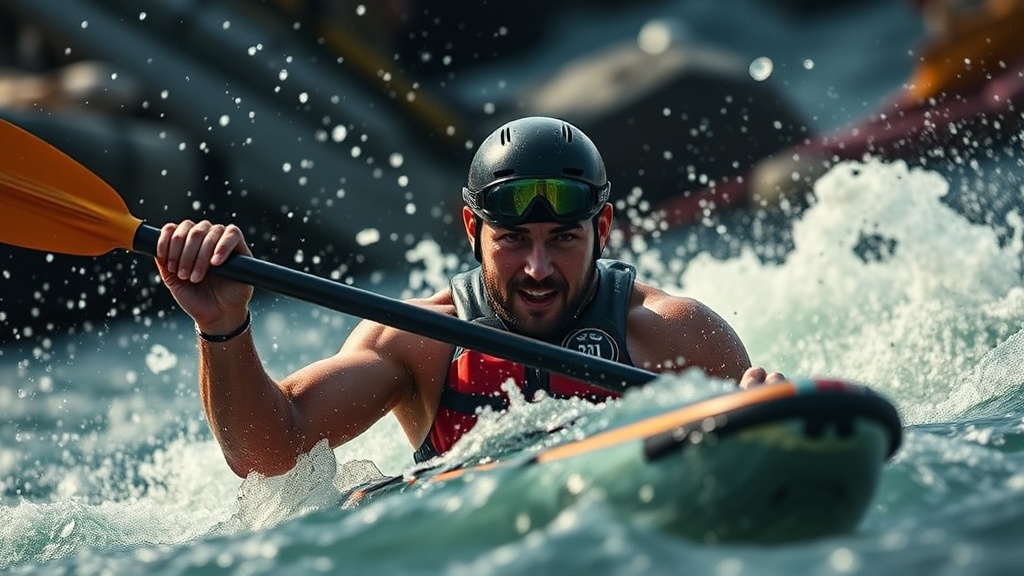
The Unsung Muscle Groups Every Rafter Should Train First
Here's something that might catch you off guard: the average whitewater raft guide burns between 300 and 400 calories per hour during an active run—but the muscles doing most of that work aren't the ones you're probably flexing in the mirror. Most rafters spend their gym time hammering bicep curls and shoulder presses, convinced that bigger arms equal better paddling. The reality? Your core, hips, and posterior chain are the real engines powering every stroke, brace, and recovery move you'll make on the water. Ignore them, and you're leaving performance (and safety) on the table.
This isn't about building a beach body—it's about building a body that won't quit when the river throws its worst at you. The following muscle groups don't get the Instagram love, but they're the difference between finishing a long day on the water feeling strong versus nursing aches and wishing you'd trained smarter. Let's dig into what actually matters.
Why Does Core Stability Matter More Than Arm Strength?
Your arms are just the messengers. Your core? That's the command center. Every paddle stroke starts with rotation through your obliques and transverse abdominis—not your biceps pulling against the water. When you brace against a sudden hit from a hydraulic, it's your deep core muscles that keep you upright and in the boat. Without that foundational stability, your arms tire fast, your form falls apart, and you become a liability instead of an asset.
The problem is most people train their core like they're preparing for a magazine cover. Crunches and sit-ups have their place, but they're not what you need for the river. You need anti-rotation strength—the ability to resist forces trying to twist you out of position. Think Pallof presses, dead bugs, and suitcase carries. These movements teach your core to stay rigid under load while your limbs do the work. That's exactly what happens when you're digging deep through a technical rapid.
Don't forget the posterior chain either. Your lower back and glutes anchor every powerful stroke. Weak glutes mean you're overcompensating with your lower back, which explains why so many rafters complain about back pain after multi-day trips. Romanian deadlifts, kettlebell swings, and single-leg hip thrusts belong in your weekly rotation—not as accessories, but as main lifts.
What Hip Mobility Exercises Prevent Injury on the River?
Tight hips aren't just uncomfortable—they're dangerous. When your hip flexors and external rotators lack range of motion, you can't get low in the boat for stability. You can't react quickly when the raft shifts unexpectedly. And you definitely can't maintain proper paddling posture for hours on end. Stiff hips force your lower back and knees to pick up slack they weren't designed to handle.
The solution isn't just stretching (though that helps). You need loaded mobility work that builds strength through your full range of motion. Cossack squats teach your hips to open laterally—critical when you're bracing with a foot planted against the tube. Deep goblet squats with a pause at the bottom reinforce the positions you'll hold during a high-side maneuver. And 90/90 switches improve internal and external rotation simultaneously, mimicking the transitions you'll make from paddling side to side.
Pay special attention to your hip flexors if you spend your off-hours sitting at a desk. Chronically shortened hip flexors pull your pelvis into anterior tilt, which throws off your entire kinetic chain. That's why that low back pain keeps coming back no matter how much you rest. Add couch stretches and hanging hip flexor mobilizations to your daily routine—not just before river trips, but year-round.
How Do Your Feet and Ankles Affect Paddling Power?
This one surprises people. Your feet are your connection to the raft. Weak feet and unstable ankles mean you're constantly recruiting extra muscle just to stay balanced—energy that could be going into your strokes instead. When you're punching through a hole or ferrying across heavy current, you need to drive force through your lower body into the boat's floor. That force transfer depends entirely on foot and ankle integrity.
Start with simple strengthening: single-leg balance work, towel scrunches, and short-foot exercises (drawing the ball of your foot toward your heel without curling your toes). These build the intrinsic foot muscles that provide sensory feedback and automatic adjustments. Follow with ankle mobility—knee-to-wall drills and banded ankle distractions restore dorsiflexion range you'll need for aggressive bracing positions.
The payoff extends beyond paddling. Strong, mobile feet and ankles reduce your risk of knee and hip injuries by ensuring proper alignment up the chain. They also improve your proprioception—that sense of where your body is in space—which becomes pretty important when you're surfing a hole and need to know exactly where your weight should be without looking down.
Why Should Rafters Prioritize Scapular Control?
Shoulder injuries end more rafting careers than almost anything else. The repetitive overhead motion of paddling, combined with sudden loaded positions when bracing, creates a perfect storm for impingement and rotator cuff damage. But the real culprit usually isn't the shoulder joint itself—it's scapular instability. When your shoulder blades don't move properly on your ribcage, your rotator cuff muscles can't do their jobs, and something eventually gives out.
Focus on exercises that teach upward rotation, retraction, and depression of the scapulae. Wall slides with your forearms vertical wake up the serratus anterior—that muscle that looks like fingers wrapping around your ribs and plays a huge role in shoulder health. Face pulls and prone Y-T-W-L raises strengthen the lower traps and rhomboids that keep your shoulders packed and safe during heavy pulls. And Turkish get-ups (performed slowly and deliberately) build integrated shoulder stability under varying loads and positions.
Don't skip the rowing and pulling variations either, but do them right. Pull-ups and rows are great, but most people rush through them without engaging the scapulae first. Practice initiating every pull by depressing and retracting your shoulder blades before bending your elbows. That sequence—scapular movement before arm movement—is exactly how you should paddle. Reach, rotate your torso, plant the blade, then pull with your back and core. Your shoulders are just along for the ride.
Sample Weekly Training Split for River-Ready Fitness
You don't need to live in the gym to build these qualities. Three focused sessions per week, plus some daily mobility work, will transform your durability on the water. Here's a practical framework:
- Day 1 (Lower Emphasis): Heavy squats or deadlifts, Bulgarian split squats, kettlebell swings, 90/90 hip mobility, ankle work
- Day 2 (Upper/Pulling): Pull-ups or rows, face pulls, Turkish get-ups, dead bugs, Pallof presses, scapular wall slides
- Day 3 (Full Body/Conditioning): Loaded carries, sled pushes or drags, rotational medicine ball throws, deep squat mobility, single-leg balance work
Add 10-15 minutes of targeted mobility before bed—hip flexor stretches, thoracic spine rotations, and ankle circles. Consistency beats intensity here. Small doses done regularly create lasting tissue adaptations better than occasional marathon sessions.
The river doesn't care how much you can bench press. It cares whether your body can generate force from the ground up, maintain position under chaotic loads, and keep working when you're four hours into a day that started at dawn. Train the muscles that actually matter, and you'll find yourself not just surviving the rapids—but owning them.
"The best rafters I know don't look like action heroes. They look like farmers—solid through the middle, stable in the hips, and capable of sustained effort all day long."
For more on training principles that transfer to real-world performance, check out StrongFirst's resources on functional strength. The American Canoe Association also offers comprehensive safety and skills guidelines worth reviewing. And if you're dealing with persistent aches that won't resolve, the Mayo Clinic's core training overview provides solid foundational advice.