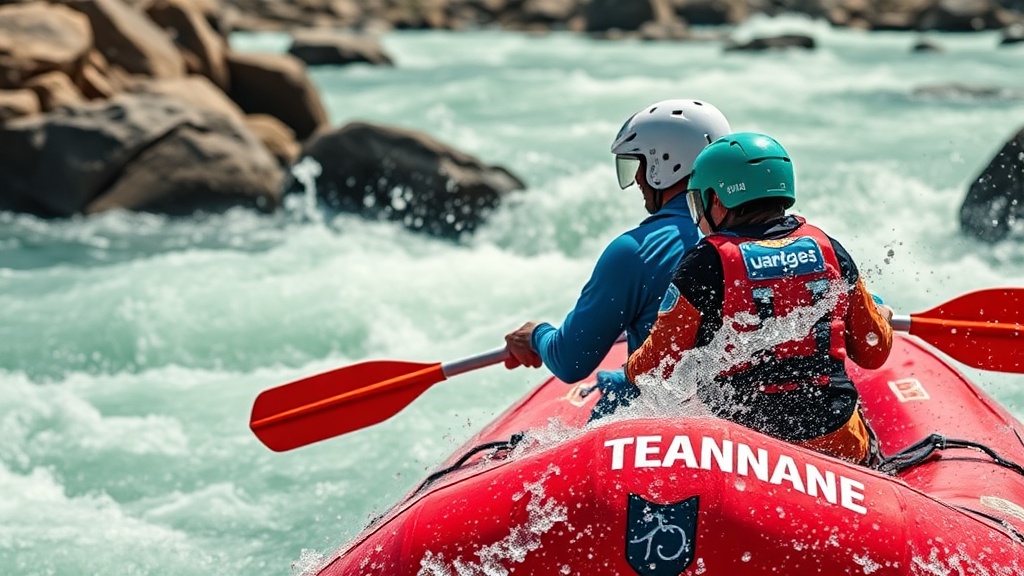
The Ultimate Whitewater Rafting Guide: From First Timer to Rapids Master

Whitewater rafting delivers a full-body workout disguised as adventure. This guide covers everything from choosing the right difficulty level and gear to reading river currents and staying safe on the water. Whether the goal is a weekend thrill or building serious paddling skills, here's what actually matters.
What Difficulty Level Should Beginners Start With?
Class I or II rapids. Anything higher puts inexperienced paddlers at unnecessary risk and frankly, ruins the fun.
The International Scale of River Difficulty breaks rapids into six classes. Class I means flat water with small waves—perfect for learning paddle strokes without fighting the current. Class II introduces straightforward rapids with clear channels. You'll get splashed. You might bounce. But you're not fighting for survival.
Here's the thing: outfitters sometimes undersell difficulty to fill boats. That "mild" trip might include Class III sections during high water. Always ask about current river conditions. The American Whitewater database tracks real-time flow data for rivers across North America. Check it before booking.
Class III demands technical paddling and quick teamwork. Save it for trip two or three. Class IV and above? Those require years of experience, proper training, and usually a different boat entirely.
| Class | Description | Who It's For |
|---|---|---|
| I | Flat water, small waves, no obstacles | First-timers, families with kids |
| II | Straightforward rapids, clear channels, some maneuvering | Beginners ready for splashes |
| III | Moderate irregular waves, narrow passages, requires scouting | Intermediate paddlers with basic training |
| IV | Intense powerful rapids, precise boat handling mandatory | Advanced paddlers only |
| V | Extremely difficult, violent currents, expert-only | Professionals with rescue training |
| VI | Unrunnable—serious hazard to life | Don't. |
What Gear Do You Actually Need for Whitewater Rafting?
The outfitter provides most equipment. Personal preparation matters more than buying gear.
Quality rental packages include: a self-bailing raft (the floor has holes that drain water), paddles sized to your height, Coast Guard-approved Type V life jackets (they're rated for whitewater specifically), and helmets certified for water sports—not climbing or cycling.
Wear synthetic layers. Cotton kills—literally. When wet, cotton saps body heat 25 times faster than air. Opt for moisture-wicking base layers from brands like Patagonia or Smartwool. Board shorts work. So do athletic leggings.
Footwear requires thought. Old running shoes work in a pinch. Better: dedicated water shoes like the Astral Brewess or NRS Vibe. They drain fast, grip slick rocks, and won't fall off in a swim. Sandals without heel straps? Leave them home. They become projectiles.
Worth noting: sunscreen and sunglasses. The water reflects UV. A cheap pair of floating shades beats replacing Oakleys at the bottom of the Gauley River. Chums or Croakies retainers cost $8 and save $200.
How Do You Read River Currents and Avoid Hazards?
Look for "V"s pointing downstream—those indicate the main current and safest route. Avoid "V"s pointing upstream. Those mean trouble.
Rivers speak a visual language. Standing waves (the white foamy lines) form where water flows over submerged rocks. Hit them straight on. They'll soak you but won't flip the boat. Haystacks—those big rolling waves—form in deep channels. Same rule: square up and punch through.
Hazards hide in plain sight. Strainers—downed trees or branches—let water through but trap solid objects. Including people. Avoid them entirely. Undercut rocks create recirculating currents called hydraulics or "keepers." A swimmer caught in one gets recycled indefinitely. The catch? They look innocent from upstream. Dark water behind a rock means danger.
Eddies—calm spots behind rocks or along shore—provide rest. The boundary between current and eddy is the eddy line. Cross it aggressively or it'll spin the boat.
Take a swiftwater rescue course before tackling anything above Class III. The Rescue3 International certification runs two days and covers throw bag technique, swimmer recovery, and basic rope systems. It's $350 that could save a life. Yours.
Basic Paddle Commands Every Rafter Should Know
The guide shouts. You respond. Simple—unless you don't know the vocabulary.
- All forward — Everyone paddles forward together
- All back — Everyone paddles backward
- Left back, right forward — Spins the boat right (and vice versa)
- Stop — Cease paddling immediately
- High side — Move to the downstream side fast—prevents flipping
- Hold on — Self-explanatory. Dig in.
Timing matters more than power. Watch the guide's blade—when it enters the water, yours should too. Synchronized strokes move a raft efficiently. Random flailing wastes energy and throws off the boat's angle.
What's the Best Physical Preparation for Rafting?
Cardio and core strength. Arms help, but the power comes from your torso.
Paddling engages the entire posterior chain—lats, rhomboids, obliques, and hip flexors. A strong core transfers force from legs through shoulders without blowing out your lower back. Planks, Russian twists, and kettlebell rows build the right strength.
Endurance matters on multi-day trips. The Grand Canyon's Class IV rapids come at mile 97. After six days of loading boats and sleeping on sand. If your fitness peaks at twenty minutes, reconsider the itinerary.
Swimming ability is non-negotiable. Not doggy paddle—confident, controlled swimming. You might swim a rapid. Cold water, currents, and panic kill weak swimmers. Take lessons. Practice in open water. The pool doesn't prepare you for hydraulics.
That said, you don't need to be an athlete for Class II trips. Reasonable fitness suffices. Walk regularly. Do some pushups. You'll be fine.
Where Are the Best Whitewater Rafting Destinations in North America?
The Gauley River in West Virginia for consistent big water. The Grand Canyon for epic multi-day wilderness. The Gauley's season runs September through October when dam releases create predictable Class IV+ rapids. Guides know the lines. The canyon walls tower 1000 feet.
California's American River splits into three forks. The South Fork handles beginners beautifully. The Middle Fork challenges intermediates with Class III-IV drops through Gold Country. The North Fork? That's for experts. Tunnel Chute Rapid drops into a blasted rock tunnel. Not a beginner run.
Oregon's Rogue River combines wildlife (bears, otters, bald eagles) with roller-coaster rapids. Permits required for multi-day trips—apply through Recreation.gov months ahead.
Maine's Kennebec and Dead Rivers run dam-controlled releases through summer. Cold water (dam-bottom release) but reliable flows when natural rivers drop too low. Great for July and August trips.
Closer to Ontario—where this guide originates—the Ottawa River delivers world-class big water an hour from Ottawa. The Rocher Fendu section features waves named "Coliseum" and "Big Whopper" that swallow rafts whole. Local outfitters like Wilderness Tours and RiverRun run trips May through September.
"The river is everywhere at the same time, at the source and at the mouth... in the ocean and in the mountains, everywhere, and that the present only exists for it, not the shadow of the past, nor the shadow of the future." — Hermann Hesse (adapted for river runners)
Safety Protocols That Actually Save Lives
Wear your life jacket. Tight. If you can slip two fists between your ribs and the jacket, it's too loose. A loose PFD floats above you while your body sinks.
Listen to the safety talk. Every outfitter gives one. They're repetitive. They're also legally mandated because people die when they ignore them. The swim position—feet up, downstream, on your back—prevents foot entrapment. Standing in moving water is how ankles break and drowning happens.
Know the signals. Guides use paddle or hand signals when voice won't carry. Pay attention during calms.
Stay with the boat unless instructed otherwise. Rafts float. People don't (without help). Swimming to shore sounds smart. It often isn't. The current runs faster in the middle. Shorelines hide strainers.
Hydrate. Dehydration impairs judgment. The river demands focus. Bring a Nalgene or Hydro Flask. Clip it to the boat.
Is Whitewater Rafting Safe for Kids and Non-Swimmers?
Yes—with caveats. Age limits vary by outfitter and water level. Non-swimmers must stick to Class I-II trips and wear properly fitted PFDs.
Most commercial outfitters set minimum ages between 8 and 12 for standard trips. Younger kids can run gentler sections—check for "family float" options. During spring runoff, those same rivers jump to Class III-IV and age limits rise accordingly.
Non-swimmers should absolutely inform their guide. Guides position weaker swimmers strategically—usually middle-right where the boat stays driest and recovery is fastest. They'll also brief non-swimmers extensively on what to do if they exit the boat.
Here's the thing: commercial rafting has a strong safety record. Serious incidents are rare precisely because protocols exist. Follow them. The danger spikes when overconfidence meets under-preparation.
Start small. Build skills. Progress deliberately. The river will be there next season—and the one after. Respect it, and whitewater rafting delivers unmatched thrills, genuine camaraderie, and landscapes you can't see any other way. The water's waiting.