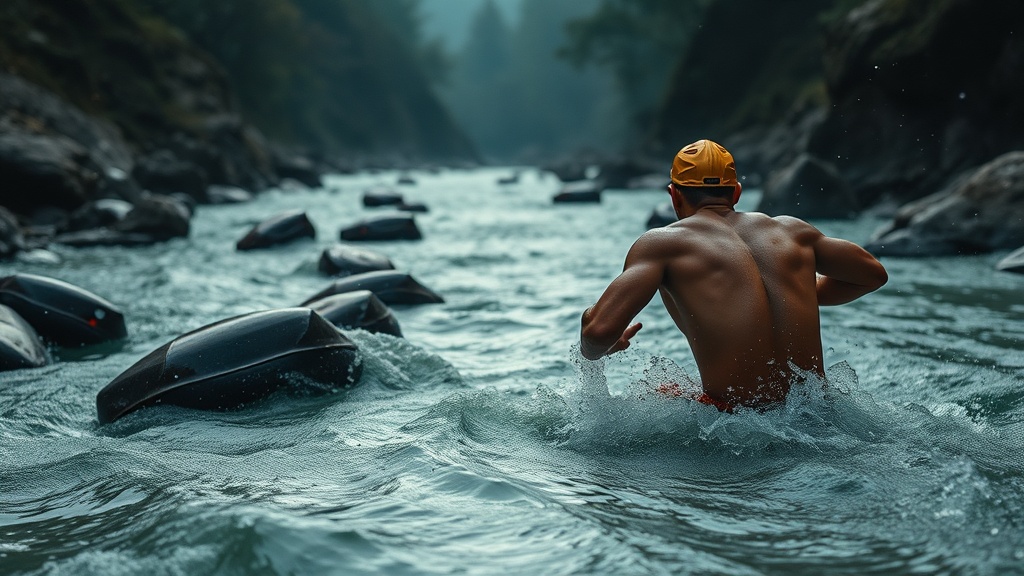
Stop Training Only Your Upper Body for Heavy River Days

The Myth of the Strong Arm
Most people think that being a great rafter is all about having massive biceps and a wide back. They see a heavy hitter pulling a high-angle stroke and assume that person has spent years lifting heavy dumbbells in a gym. This is a mistake. Relying solely on arm strength is a fast track to fatigue and, eventually, injury. If you only train your upper body, you'll find yourself gasping for air and feeling that deep, burning ache in your shoulders halfway through a Class IV run. Real power in a raft comes from a kinetic chain that starts way below the surface. You need to understand how to transfer energy from your feet, through your core, and into the paddle. Without a stable base, your upper body is just working in a vacuum—and a vacuum is an inefficient way to move a boat through heavy whitewater.
To move a heavy raft through a technical rapid, you're not just pulling a blade; you're fighting the weight of the water and the momentum of the vessel. This requires much more than just raw strength. It requires stability and rotational power. If your core is weak, every time you take a heavy stroke, your torso will wobble, and you'll lose that connection to the boat. This instability makes you work twice as hard for half the result. You're essentially trying to pull a heavy weight while standing on a moving platform without any balance. That's why your training needs to shift its focus from the gym floor to functional, multi-planar movements.
What Exercises Build Core Stability for Rafting?
If you want to stop the wobble, you need to look at exercises that demand stability under tension. Think about the way a paddle stroke works: you're rotating your torso while your lower body stays anchored. A standard crunch won't help you here. Instead, focus on anti-rotational movements. The Pallof Press is a fantastic way to teach your body to resist unwanted rotation. You're holding a cable or a band that wants to pull you out of alignment, forcing your core to stay rigid. This mimics the exact sensation of a heavy surge of water hitting your paddle side.
Another heavy hitter is the Woodchop. This movement involves a diagonal, rotational motion that mirrors the way you'll actually be pulling through the water. It builds the oblique strength necessary to keep your torso upright and powerful during a long descent. You can find excellent breakdowns of these movements on sites like StrengthLevel to ensure your form is correct. When you build that rotational strength, you're not just working your abs; you're building a functional engine that drives your entire upper body through the stroke.
Why Is Footwork Important in a Raft?
It might seem odd to talk about your feet when you're focused on a paddle, but your feet are your connection to the boat. If your feet are slipping or your legs are weak, you can't brace effectively. When the raft hits a big wave and tilts, you need to be able to drive your feet into the floor to maintain your position. This is where lower body endurance becomes a factor. You aren't just standing; you're bracing against the constant, unpredictable movement of the river.
To prepare for this, incorporate unilateral (single-leg) exercises. Movements like Bulgarian Split Squats or Single-Leg Deadlifts are great because they force you to find balance while under load. These exercises strengthen the stabilizer muscles in your ankles, knees, and hips. If you can stay stable on one leg in a gym, you'll be much better prepared to stay upright in a tossing raft. This kind of functional training ensures that your lower half provides a solid foundation for the work your arms are doing above.
How Can I Improve My Endurance for Long River Days?
Endurance in whitewater isn't just about your lungs; it's about your ability to maintain form while exhausted. Most people make the mistake of only doing long, slow cardio-style training. While a base level of aerobic capacity is fine, it won't prepare you for the high-intensity bursts required in heavy rapids. You need a blend of endurance and explosive capacity. This means your body needs to be able to handle a sudden, massive increase in workload and then recover quickly while still moving.
Interval training is your best friend here. Instead of just jogging for an hour, try high-intensity interval training (HIIT) that involves rowing or heavy paddling motions. You want to simulate the "on-off" nature of a river run. You'll have a relatively easy stretch, followed by a brutal, high-intensity rapid, and then a return to a steady pace. Training your heart rate to spike and then recover quickly is a much more accurate representation of what a real day on the water feels like. For more detailed advice on cardiovascular health and exercise, the American Heart Association offers plenty of resources on how different types of-exercise affect your system.
Don't forget about the mental side of endurance either. Endurance is as much a mental game as it is a physical one. When your forearms are screaming and your back feels heavy, your brain will tell you to slow down. Training your mind to push through that discomfort is a skill you can develop. Whether that's through high-intensity training or simply staying focused during a tough workout, building that mental toughness will pay dividends when you're three hours into a run and the rapids are still coming thick and fast.
Ultimately, your goal should be to create a body that is a unified, efficient machine. Stop thinking about your muscles as isolated parts and start thinking about them as a single system. A strong pull starts in the feet, travels through a rigid core, and finishes in the paddle. If any part of that chain is weak, the whole movement fails. Train with that mindset, and you'll find yourself much more capable when the water gets heavy.