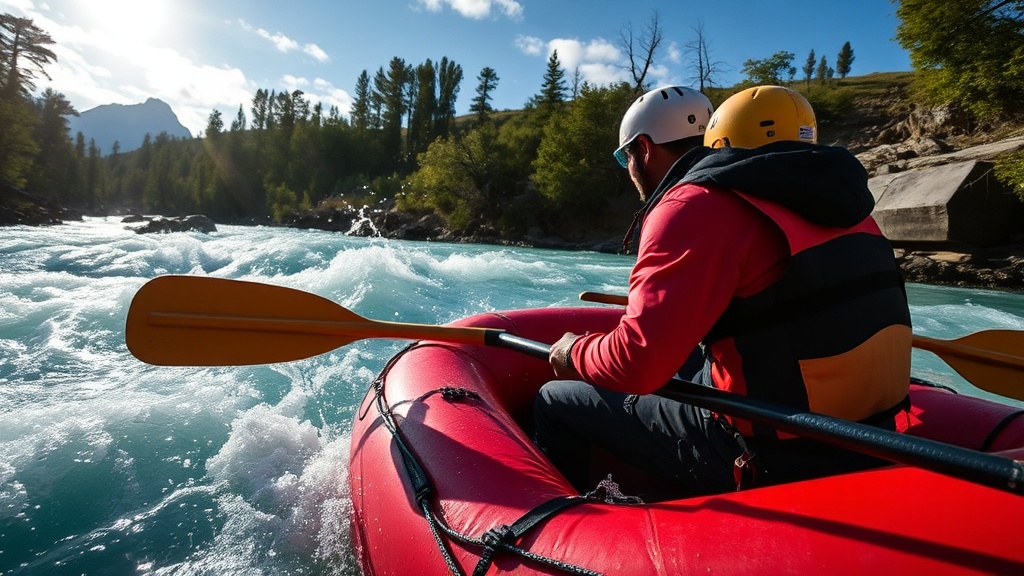
key Training Tips for Whitewater Rafting Adventures

What This Post Covers
This guide breaks down exactly what training matters for whitewater rafting — the physical conditioning, the technical skills, and the mental preparation that separate a rough ride from a great one. Whether someone is planning their first trip down the Ocoee River or gearing up for Class V rapids on the Gauley, proper preparation means more fun, fewer injuries, and the confidence to handle whatever the water throws at them. Here's the thing: most people show up underprepared. That won't be you.
How Do You Train for Whitewater Rafting?
You train for whitewater rafting by building upper body endurance, core stability, and cardiovascular fitness — plus practicing paddle technique and learning to read water. It's not about being an athlete. It's about having enough strength and stamina to paddle hard when the river demands it.
Rafting taxes the body in specific ways. Paddling against currents requires sustained pulling power through the back, shoulders, and arms. Bracing against the raft's movement demands a rock-solid core. And when a swimmer goes overboard or a wrap happens, explosive strength becomes necessary — fast.
Start with paddling-specific cardio. Rowing machines (the Concept2 Model D is the gold standard) build the exact pulling motion used in rafting. Alternate between steady-state sessions (20–30 minutes at moderate resistance) and interval training — 30 seconds hard, 90 seconds easy, repeated 10 times. Kayakers and rafters both benefit from this approach, though rafters need more emphasis on sustained output versus the short bursts kayakers favor.
Strength training should prioritize pulling movements. Lat pulldowns, seated rows, and bent-over rows develop the back strength needed to drive a paddle through aerated, resistant water. Don't ignore the rotator cuff — band exercises like external rotations prevent the shoulder injuries common among paddlers who only train the big muscles. The catch? Most gym routines focus on pressing movements (bench press, shoulder press). Flip that script. Aim for a 2:1 ratio of pulling to pressing volume.
Core Work That Actually Matters
A weak core means poor boat control. When the raft hits a hole or spins into a reversal, the body absorbs impact through the midsection. Planks are fine — but anti-rotation work matters more. Pallof presses, dead bugs, and single-arm carries (the farmer's walk with one kettlebell) train the core to resist twisting forces. That's exactly what happens when water hits the side of the raft.
Three times per week, hit this short core circuit:
- Dead bug: 3 sets of 10 per side
- Pallof press: 3 sets of 12 per side (use a resistance band or cable machine)
- Side plank with hip dip: 3 sets of 8 per side
- Renegade row: 3 sets of 6 per side (keeps the core braced under load)
Finish with hanging leg raises if grip strength allows — the forearm endurance translates directly to holding a paddle shaft for hours.
What Strength Level Do You Need for Class III and IV Rapids?
You need enough upper body endurance to paddle continuously for 20–30 minutes and enough core strength to stabilize yourself when the raft hits big hydraulics. Raw strength matters less than the ability to repeat moderate efforts while fatigued.
Class III rapids — like those on the New River Gorge — demand teamwork and timing more than brute force. But Class IV, such as the Upper Gauley or Cherry Creek, requires explosive power on demand. The difference isn't just technique — it's whether the body can deliver full effort after already paddling hard for two hours.
Here's a benchmark: if someone can complete 10 pull-ups and hold a front plank for 90 seconds, the baseline strength exists. The next step is adding resistance and time under tension. Try weighted pull-ups with a Rogue nylon dipping belt — start with 10 pounds, work up to 25. For planks, add weight plates to the lower back or progress to RKC planks (maximum tension for 10-second holds).
Swimming ability deserves mention. Not gym strength — actual open-water competency. PFDs (personal flotation devices) save lives, but strong swimmers recover faster when ejected. The American Red Cross offers adult swim classes nationwide. Worth noting: panic in water burns energy fast. Comfort in rapids comes from hours in pools and flatwater first.
What Gear Should Beginners Invest In First?
Beginners should buy a quality PFD, a helmet that fits properly, and proper footwear before worrying about paddles or drysuits. These three items affect safety and comfort more than anything else on the water.
The table below compares entry-level versus mid-range options for core gear. Prices reflect 2024 retail — shop end-of-season sales (September through November) for 30–40% discounts.
| Gear Category | Budget Option | Price | Mid-Range Upgrade | Price |
|---|---|---|---|---|
| PFD (Type III) | NRS Vista | $85 | Astral V-Eight | $140 |
| Helmet | WRSI Current Pro | $60 | Sweet Protection Strutter | $180 |
| Footwear | NRS Kicker Wetshoe | $50 | Astral Loyak | $100 |
| Paddle | Carlisle Guide | $75 | Werner Powerhouse | $250 |
| Drysuit/Wetsuit | NRS Radiant 3/2 Wetsuit | $150 | Level Six Emperor Drysuit | $850 |
The NRS Vista PFD works fine for flatwater and mild Class II. For anything more serious, the Astral V-Eight breathes better during hard paddling — the mesh lower back prevents that sweaty, trapped feeling after hours in the sun. That said, fit trumps brand. A PFD should be snug enough that someone can't pull it over the head when buckled, but not so tight that breathing feels restricted.
Helmets protect against two things: impact with rocks and impact with paddles. The WRSI Current Pro covers the basics — hard shell, decent drainage, adjustable fit. The Sweet Protection Strutter adds better coverage around the temples and a more precise retention system. Both pass CE 1385 safety standards. The price gap reflects comfort on long days and durability over seasons, not just safety.
Footwear: The Overlooked key
River rocks are slick. Old sneakers with smooth soles send people sliding. The NRS Kicker offers basic neoprene protection and grippy rubber for under $60. Step up to the Astral Loyak for stickier G.15 rubber (the same compound used in approach shoes for rock climbing) and better drainage. Either way — no flip-flops, no hiking boots that fill with water, no exceptions.
How Long Should You Train Before a Multi-Day River Trip?
Plan for 8–12 weeks of dedicated preparation before a multi-day rafting trip involving Class III+ rapids. Shorter trips or easier water need less — but showing up unprepared on a Grand Canyon self-support or Middle Fork of the Salmon ruins the experience for everyone.
Multi-day trips add demands that day trips don't. Loading and unloading heavy gear boats. Setting up camp in uneven terrain. Paddling while sore from yesterday. The body adapts, but adaptation takes time. Here's a realistic 8-week progression:
Weeks 1–2: Base building. Rowing machine 3x per week, 20 minutes steady state. Light strength training focusing on form. Start swimming if not already comfortable in water.
Weeks 3–4: Add interval training. Rowing sprints on Tuesdays, longer steady rows on Thursdays. Introduce paddle-specific core work (the circuit outlined earlier). Begin hiking with a weighted pack — 30 pounds, 3 miles, once weekly.
Weeks 5–6: Increase volume. Rowing sessions hit 30–35 minutes. Strength work adds single-arm dumbbell rows and kettlebell swings. Practice wet exits and swimming in moving water if possible — local park districts sometimes offer swiftwater orientation classes.
Weeks 7–8: Peak and taper. Maintain intensity but reduce volume by 20% in week 7. Week 8 — the trip week — keep movement light. Mobility work, short rows, maybe one moderate strength session early in the week. Then rest. The fitness is built. Now it's about being fresh.
Mental Preparation: The Hidden Component
Physical readiness means nothing if the mind panics when the raft drops into a big hole. Visualization helps. Before sleep, run through scenarios — falling out, swimming to an eddy, helping flip a boat. The brain doesn't fully distinguish imagined experience from real experience. A few minutes of mental rehearsal builds familiarity that reduces panic response.
Breath control matters too. When cold water hits the face, the mammalian dive reflex triggers — heart rate drops, breathing becomes harder to control. Practice box breathing (four counts in, hold, out, hold) during workouts. The pattern becomes automatic under stress. Cold showers — genuinely uncomfortable but effective — build tolerance for that initial shock.
"The river doesn't care about your training plan. It cares whether you can perform right now, cold and wet and tired." — Hamilton local guide, Grand River Rafting
Whitewater rafting rewards preparation. The paddler who trained shows up relaxed, ready to read the river, ready to help teammates. The unprepared paddler burns out early, becomes a liability, misses the joy of being fully present in big water. Training isn't punishment — it's the price of admission for the good stuff.