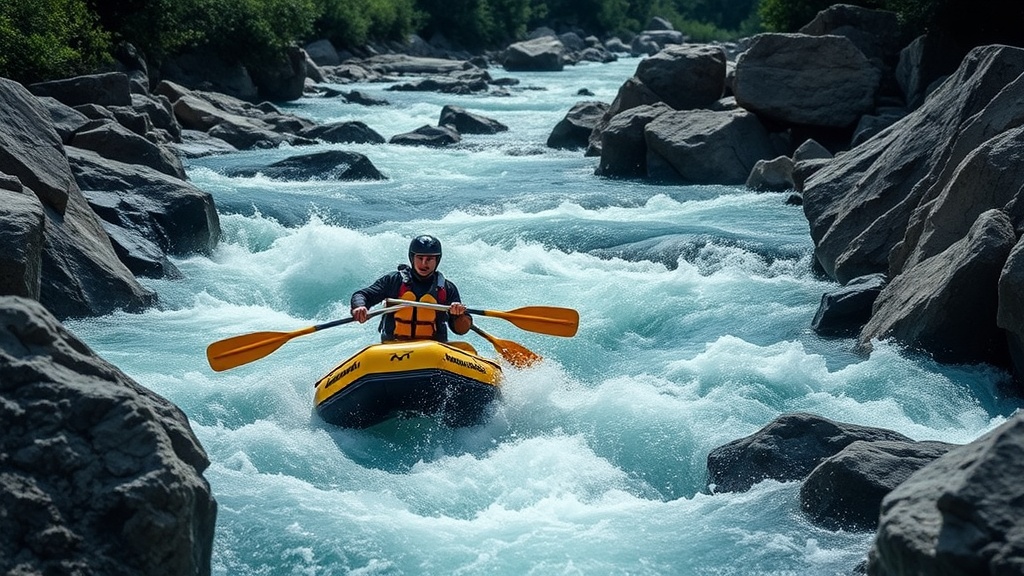
How to Train for Whitewater Rafting: A Complete Guide for Beginners

What Physical Fitness Level Do You Need for Whitewater Rafting?
You don't need to be an elite athlete to enjoy whitewater rafting — but basic fitness makes the difference between a thrilling adventure and a miserable struggle. Most beginner-friendly trips (Class I-III rapids) require moderate endurance, upper body strength for paddling, and enough core stability to stay balanced in an inflatable raft. This guide breaks down exactly how to prepare your body for the river, whether you're booking a half-day excursion on the Upper Gauley or a multi-day expedition through the Grand Canyon.
Why Paddling Demands More Than Arm Strength
Here's the thing: novice rafters always think it's all about the arms. Wrong. Effective paddling starts from your core — your abs, obliques, and lower back rotate to generate power that travels through your shoulders and into the paddle. Neglect core training and you'll tire out in twenty minutes. Worse, you might strain something.
The catch? Rivers don't pause for breath. You'll paddle hard for 30-60 second bursts through rapids, then recover during calm stretches. That's interval training — and your body needs to handle it.
What Exercises Build Rafting-Specific Strength?
The best training mimics the demands of the river: rotational power, pulling strength, grip endurance, and balance on unstable surfaces. Skip the bicep curls. Focus on compound movements and functional patterns instead.
Core: Your Paddling Engine
A strong core keeps you upright when waves hit and transfers power from your legs through your torso. Try these three movements twice weekly:
- Pallof Press: Stand perpendicular to a cable machine, hold the handle at chest height, and press straight out without rotating. Three sets of 12 reps each side builds anti-rotational strength — exactly what you need when water pushes against your paddle.
- Russian Twists with Medicine Ball: Sit on the floor, lean back slightly, and rotate the ball side to side. Mimics the torso rotation of paddling strokes. Use an 8-12 pound ball for three sets of 20.
- Dead Bugs: Lie on your back, extend opposite arm and leg while keeping your lower back pressed to the floor. Simple but brutal for deep core stability. Three sets of 10 each side.
Upper Body: Pulling Power and Grip
Paddling is mostly pulling — drawing the paddle through water requires lat strength, rear deltoids, and forearms that won't quit. Add these to your routine:
- TRX Rows or Inverted Rows: Three sets of 10-12. These beat seated rows because you're supporting your body weight — just like in a raft.
- Pull-ups (assisted if needed): Can't do a full pull-up? Use a resistance band or machine. Aim for three sets of 5-8.
- Farmer's Carries: Grab two heavy dumbbells (start with 30-40 lbs each), walk 40 yards, set down, repeat. Builds the grip endurance you'll need for holding a paddle through a long rapid.
Legs and Balance: Staying in the Boat
Your legs anchor you. When the raft drops into a hole or hits a wave sideways, you'll be bracing with your feet wedged under straps. Weak legs mean you fly out. Here's your fix:
Bosu Ball Squats: Stand on a Bosu Balance Trainer (flat side down), squat low, stand. The instability trains your ankles, knees, and hips to fire together — exactly what happens when water surges beneath the raft. Three sets of 12.
Lunges with Rotation: Step forward into a lunge, rotate your torso over the front leg, step back. Combines leg strength with the rotational movement of paddling. Three sets of 10 each leg.
How Long Should You Train Before Your First Rafting Trip?
Start six to eight weeks before your trip for noticeable improvement. Two weeks? Better than nothing — focus on cardio and core. Here's a realistic timeline:
| Weeks Before Trip | Focus Areas | Weekly Commitment |
|---|---|---|
| 8-6 weeks out | Build base strength (full body), start cardio | 3-4 sessions, 45 min each |
| 5-3 weeks out | Add interval training, emphasize core and pulling | 4 sessions, 45-60 min each |
| 2-1 weeks out | Maintain fitness, practice paddling motions, rest adequately | 3 sessions, 30-45 min each |
Worth noting: overtraining right before your trip leaves you sore and fatigued when you hit the river. Taper off the intensity in that final week.
Cardio: Don't Skip It
Rafting days are long. Even on commercial trips with motorized support, you'll paddle 2-4 hours daily on multi-day trips. Your cardiovascular system needs to handle it. Mix these modalities:
- Rowing machine: Most sport-specific option. Builds pulling endurance and cardio simultaneously. Try 20 minutes at moderate pace.
- Swimming: Water confidence matters — and swimming builds lung capacity like nothing else. Freestyle or breaststroke, 30 minutes.
- HIIT circuits: 30 seconds hard effort (burpees, kettlebell swings, mountain climbers), 30 seconds rest, repeat 10 rounds. Mimics the start-stop nature of rapids.
What Gear and Skills Should You Practice Before Hitting the River?
Physical fitness is half the equation. Technique and familiarity with equipment separate confident paddlers from nervous beginners.
The Forward Stroke: Your Foundation
A proper forward stroke uses your entire body — not just flailing arms. Rotate your torso as you plant the paddle blade fully in the water (the "catch"), pull by unwinding your core, then exit the blade cleanly at your hip. The American Whitewater organization offers excellent technique videos for beginners.
Practice on flat water first — a local lake with a recreational kayak or paddleboard works perfectly. Ten minutes of focused stroke practice beats an hour of sloppy paddling.
Swimming and Self-Rescue
Everyone swims eventually. It's not a failure — it's part of the sport. You should be able to:
- Swim 100 yards in moving water (not just a pool)
- Float on your back with feet downstream (the "defensive swimming position")
- Grab a throw rope if someone tosses one
- Climb back onto an overturned raft or swim to shore
Many outfitters — like OARS or local rafting companies — offer pre-trip pool sessions. Take advantage. Swimming in a life jacket (PFD) feels completely different than without.
What to Wear and Bring
That said, the right gear prevents more problems than fitness ever will. For cool-weather trips or early season runs:
Wetsuit vs. Drysuit — What's the Difference?
Wetsuits (typically 3mm neoprene) trap a thin layer of water against your skin that warms up to body temperature. Fine for water above 60°F. The NRS Radiant Wetsuit ($189) is a solid entry-level option.
Drysuits keep you completely dry with waterproof fabric and latex gaskets at the neck and wrists. Necessary for cold water (below 55°F) or extended swims. Expect to pay $600+ for a quality suit like the Kokatat Meridian or NRS Expedition — but hypothermia isn't worth the savings.
For footwear, forget flip-flops. Old sneakers work in a pinch, but dedicated water shoes like the Astral Brewer or Chaco Z/1 provide better traction on slippery rocks and protection if you walk out of a rapid.
Mental Preparation: Reading Water
Here's something they don't tell beginners: half the battle is knowing where to paddle and where not to. Before your trip, study basic river features:
- Eddies: Calm water behind rocks or on river edges — your rest stop
- Holes: Recirculating water that can flip rafts — avoid or punch through with speed
- Channels: The main flow — usually deepest, fastest water
Books like The Whitewater Rescue Manual by Charles Walbridge provide excellent primers. Worth reading even if you're going with a guide.
"The best paddlers aren't the strongest — they're the ones who read the river three moves ahead." — Veteran guide on the Ottawa River
Nutrition and Hydration on the River
You'll burn 300-500 calories per hour paddling hard. Pack accordingly. Energy bars (Clif Bar, RXBAR), trail mix, and fruit work well. Avoid heavy meals right before rapids — nobody wants to see breakfast again.
Hydration is trickier than it sounds. You might not feel thirsty surrounded by water, but sun exposure and exertion dehydrate you fast. Bring a Nalgene bottle with a carabiner clipped to the raft's perimeter line — or better, a hydration bladder you can sip from without fumbling.
The Day Before: Final Prep
Don't train hard. Light stretching, maybe a brisk walk. Check your gear list twice. Get eight hours of sleep — adrenaline will wake you up early anyway. Eat a solid breakfast with complex carbs and protein (oatmeal with peanut butter, eggs and toast) two hours before launch.
That first rapid will test everything you've built — the core strength, the cardio base, the practiced strokes. But you'll be ready. The river doesn't care about your excuses, but it rewards those who come prepared.
Steps
- 1
Build Core and Upper Body Strength
- 2
Develop Cardiovascular Endurance
- 3
Practice Paddle Techniques and Safety Drills