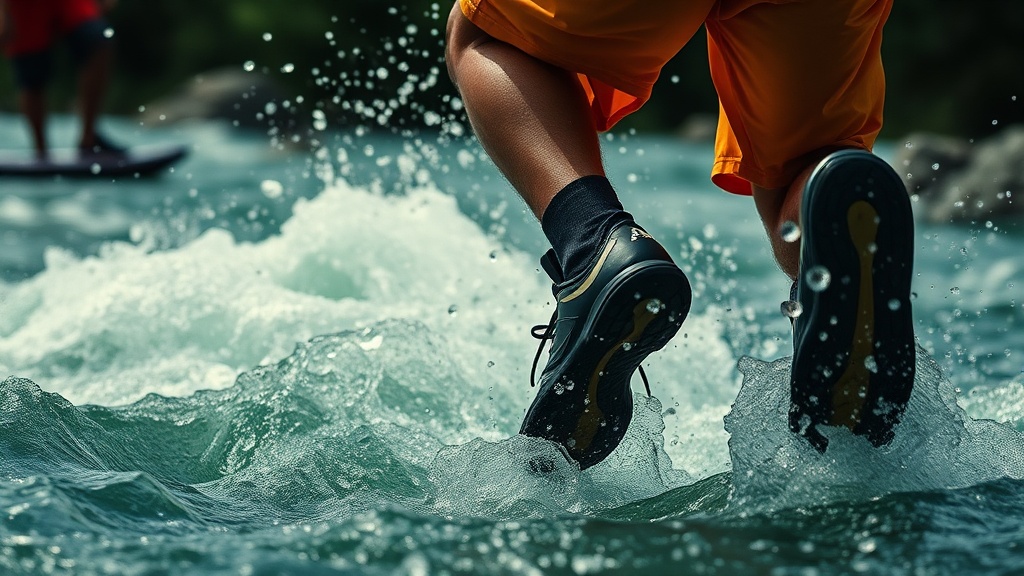
Building Explosive Leg Power for Heavy River Days

Why does my lower body feel weak when the rapids get heavy?
You've spent months working on your grip and your core, yet when you're sitting in a high-volume rapid, your legs feel like they're made of jelly. You're trying to brace against the foot-braces or push off the side of the raft to change direction, but you just don't have the drive. This isn't a lack of willpower; it's a lack of specific lower-body power. In whitewater rafting, your legs aren't just for sitting—they're your primary stabilizers and your secondary engine. If your legs can't handle the lateral forces of a heavy eddy turn, your upper body has to do double the work, which leads to premature fatigue.
This guide covers why lower-body strength is often the missing piece in a paddler's fitness routine. We'll look at the mechanics of bracing, the types of movements that build functional power, and how to integrate these into your training cycle. We aren't talking about bodybuilding legs; we're talking about the kind of strength that keeps you upright when the boat is bouncing off a rock.
The Role of the Lower Body in Raft Stability
When you're handling a technical rapid, your center of gravity is constantly shifting. You use your legs to absorb the shock of the water hitting the hull. If your legs are weak, your hips will wobble, and that instability travels straight up your spine to your core and shoulders. This is why even the best paddlers feel "spent" after a long day on the river—it's often because their lower body couldn't hold their position effectively.
Think about the physical demand of a heavy draw stroke or a high-angle stroke. You aren't just pulling with your arms; you're pushing against the foot-braces to create a solid platform. Without that tension in your legs, your upper body is effectively floating rather than being anchored. This lack of connection is where most people fail when the water gets heavy.
What are the best exercises for raft bracing strength?
To build a base that won't quit, you need to move beyond basic machine-based leg extensions. You need movements that require stability and multi-planar strength. Here are a few directions to take your training:
- Goblet Squats: These are fantastic for teaching you to keep your torso upright while under a load—much like staying upright in a turbulent boat.
- Lateral Lunges: Since rafting involves a lot of side-to-side movement and bracing against lateral waves, building strength in the frontal plane is a must.
- Single-Leg RDLs: Unilateral (one-legged) training is vital. If one leg is stronger than the other, you'll find yourself tilting or losing balance in the raft during technical maneuvers.
- Weighted Step-Ups: This builds the kind of explosive power needed to drive your weight into the foot-brace during a heavy turn.
If you want to see the actual physiological benefits of strength training for endurance, check out the research on strength and metabolic efficiency. It shows that having a strong foundation actually helps your endurance by reducing the energy cost of movement.
Can leg strength improve my overall endurance on the river?
The short answer is yes. When your legs are strong enough to maintain a stable platform, your upper body can focus entirely on the paddle strokes. If your legs are weak, your core has to work overtime to prevent you from falling over, which sucks energy away from your arms and back. By building a "stiff" lower body through targeted training, you're essentially creating a more efficient transfer of power from the water to your torso.
A common mistake is thinking that because rafting is mostly "upper body," you can skip the leg days. But look at it this way: your legs are the anchor for your entire kinetic chain. If the anchor is weak, the chain breaks. I've seen plenty of paddlers who have massive shoulders but can't hold a line in a Class IV rapid because their legs couldn't hold them in the seat. It's a frustrating way to spend a trip.
For those interested in the biomechanics of how strength affects athletic performance, the Google Scholar database has plenty of studies on kinetic chain integration in high-impact sports. It's not just about muscle size; it's about how those muscles work together under load.
Integrating Leg Work into Your Routine
Don't go out and try to lift heavy weights the day before a big river trip. That's a recipe for disaster. Instead, aim for a consistent strength program that builds a base of power throughout the off-season. You want to build strength, not just fatigue. Focus on low-repetition, high-intensity movements to build raw power without adding excessive bulk that might make you feel heavy in the boat.
If you're feeling a bit of a "burn" in your legs during a long day on the river, it might be a sign that you need to focus more on eccentric strength—the ability of the muscle to control movement while lengthening. This is what happens when a wave hits you and you have to absorb that force. Incorporating slow, controlled descents in your squats can help prepare you for these unexpected jolts.
Remember, the goal is to be a more stable, more efficient paddler. A strong lower body isn't just about lifting more weight in the gym; it's about staying centered when the world is moving around you. It's the difference between fighting the boat and being part of the boat. When you're locked in, you're not just a passenger—you're a part of the machine.